English| EUR
Suggested for you
More currencies
Choose a language
A hands-on waffle workshop in Brussels teaches the techniques behind both Brussels and Liège waffles in a working kitchen near the city center.
Quick answer
Each workshop includes ingredients, equipment, and drinks, and you'll prepare both Brussels-style and Liège-style waffles under instructor guidance. Arrive between 11:00 and 18:30 to align with standard workshop time slots and avoid midday crowds.
The Brussels waffle and the Liège waffle are not the same thing, and a proper waffle making in brussels session teaches both. The Brussels variety is rectangular, light, and yeast-risen, baked in a cast-iron mold until the exterior crisps and the interior stays airy. The Liège version is denser, sweeter, studded with pearl sugar that caramelizes against the iron, and requires a different batter technique. Most visitors to Belgium taste both but never see how the texture, sugar content, and baking time diverge. You work at a shared counter in a tiled kitchen two blocks from Grand-Place, measuring flour, whipping batter, and operating the waffle irons yourself. The instructor demonstrates folding technique, explains why Brussels batter needs to rest and Liège batter does not, and monitors your timing so the waffles release cleanly from the iron. Ingredients and drinks are provided, and you leave with the recipes written out. Each session accommodates up to twelve participants, and the best arrival window is between 11:00 and 18:30, when workshop slots align with the standard schedule and foot traffic in the Îlot Sacré district thins out. Booking ahead is recommended during weekends and summer months, when walk-in availability tightens. The workshop does not require prior baking experience, but it moves quickly once the irons heat up. You will measure, mix, pour, and plate within the 90-minute window, so expect a working session rather than a demonstration. The space is small, the instruction is in English and French, and the focus is on replicable technique rather than culinary theater. If you want to understand why Belgian waffles taste different in Belgium, this is where the answer becomes tactile.
“The Brussels waffle and the Liège waffle are not the same thing, and a proper workshop teaches both.”
Admission fees for the hands-on waffle making workshop in Brussels depend on the participant's age, student status, and booking group size. All ticket types include the core instruction, ingredients, and toppings needed to prepare the waffles.
Verdict: A typical adult participant pays 34 EUR for the ninety-minute session, with the per-person price only changing if they qualify for a student discount or book a combined family ticket.
The best arrival window is between 11:00 and 18:30 on weekdays. Planning your session during this time helps you avoid peak midday congestion and aligns with standard workshop slots.
—
Arriving during early weekday slots ensures more space at the prep stations. Instructors can provide more individual attention when the room is not at capacity.
7°C to 18°C, variable rain
This shoulder season avoids the major summer travel queues. The milder weather makes walking to the workshop venue comfortable.
9°C to 20°C, brief showers
Tourism drops slightly after the summer rush, making afternoon sessions easy to book. It is a practical window for securing preferred times.
2°C to 7°C, cold and damp
The Christmas market brings massive crowds to central Brussels. Booking far in advance is essential if scheduling a session during this festive period.
Verdict: Tuesday to Thursday, session arrival at 11:00, in April or October.
The workshop guides you through mixing batter, operating an authentic cast-iron waffle iron, and tasting your own Brussels waffles.
Staff will provide an apron and direct you to your workstation.
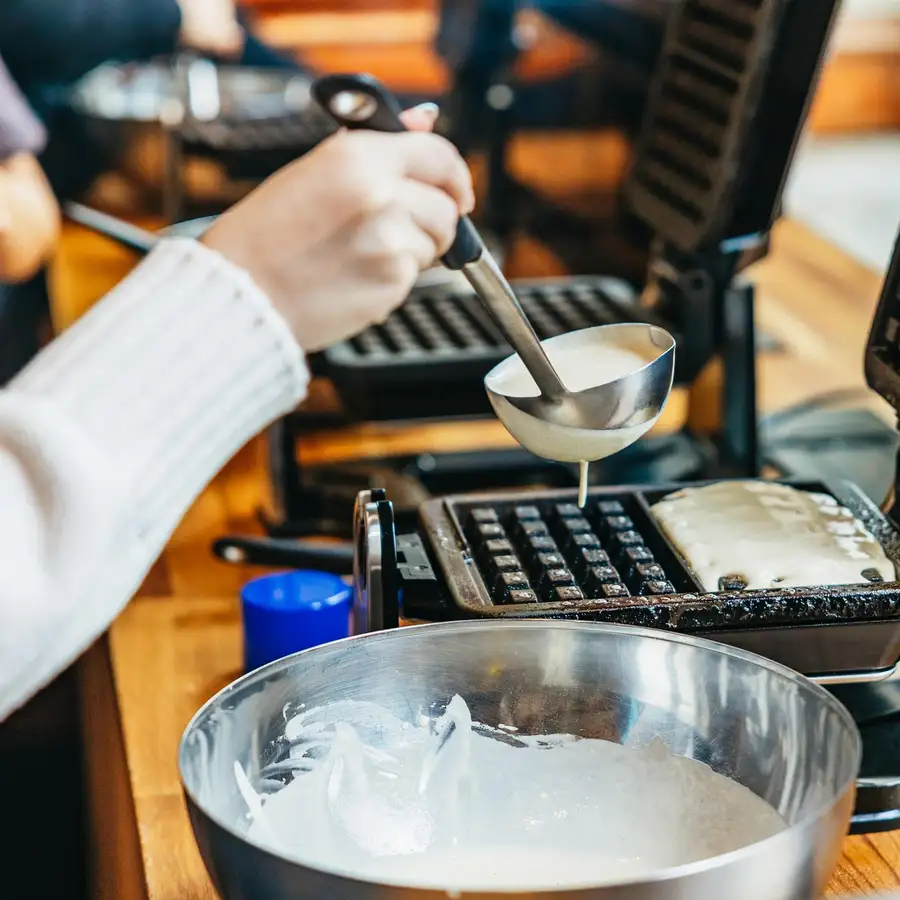
Follow the provided recipe card to combine flour, eggs, butter, and pearl sugar in the stainless mixing bowl. The instructor will demonstrate the folding technique that creates the characteristic light texture.
Wait for the iron to reach 180°C—a drop of water should sizzle immediately. Brush both plates lightly with melted butter before pouring batter into the center grid.
The waffle is ready when steam stops escaping and the edges turn golden brown.
Transfer your waffle to the wooden serving board using the provided tongs. Choose from fresh berries, whipped cream, or powdered sugar at the topping station.
Sample your waffle while it's warm—the instructor will explain how sugar caramelization and batter hydration affect the final crunch. You'll receive a recipe card to replicate the process at home.
Everything you need to know about waffle making in brussels
Participating in waffle making in brussels allows you to learn the traditional batter recipe and baking techniques for authentic Belgian waffles. You will prepare your own dessert using provided ingredients while learning tips from experienced instructors. It is a hands-on culinary experience that results in a delicious snack to enjoy on-site.
Yes, this activity is family-friendly and open to participants of various ages. It is an engaging way to introduce culinary skills while enjoying a sweet treat in a fun environment.